Finnish TV talk show host finds success in unconventional approach

 Facebook
 Twitter
 WhatsApp
 Telegram
 Linkedin
 Baidu
Baidu Balatarin
 Odnoklassniki
 Reddit
 Weibo
Weibo VK
VK Pinterest
 Copy Link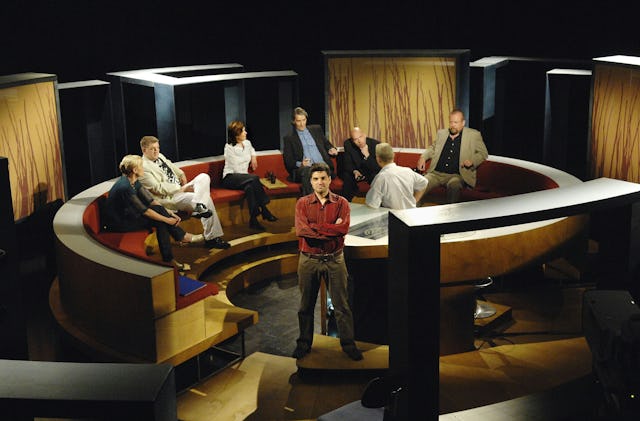
HELSINKI, Finland — Television talk shows often use conflict as their formula to win viewers, but a young producer in Finland is making a go of it with a different model.
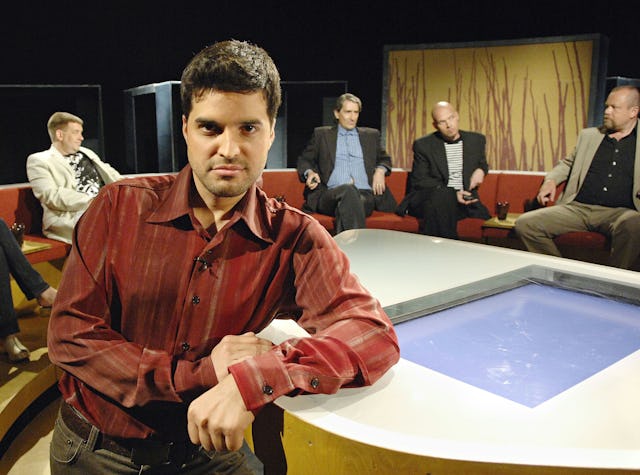
On his Monday night program, Aram Aflatuni presents a problem, then has a panel of experts try to solve it using consultation and cooperation.
"I don't believe in confrontational journalism," he says. "I do not think that it is an effective way of finding solutions."
His hour-long show - "Harkaa Sarvista," or "Grab the Bull by the Horns" - this week wraps up its first season of 15 episodes and has attracted as many as 345,000 viewers. Average viewership was 220,000 - 20 percent of the TV audience for its time period.
In Finland, TV shows often look for confrontation and "sometimes quite aggressive debate," said Juho-Pekka Rantala, a television executive who works on this show and others. "'Harkaa Sarvista' is different. It is looking for solutions."
Viewers are invited to submit an issue for consultation. If chosen, the person goes on the air and presents the problem to the panel.
Mr. Aflatuni, 31, is a member of the Baha'i Faith and said he tries to use part of a consultation model used by Baha'is as the starting point for his show.
It is a model that asks participants to remain personally detached from the ideas presented as everyone seeks a single truth or best outcome. No one "owns" or takes credit or blame for any idea offered during the consultation.
"It's a brave show because it is different," said Laura Jansson, a psychologist and human relations specialist who has appeared on the program.
"In principle, the consultative model is a key to the show's success," said Mrs. Jansson, who is a Baha'i. But viewers and even participants generally are unaware of the principles behind what is going on. More obvious, she said, is the skill of the host in guiding the conversation.
"People in the world today are very egotistical," she said. "They try and push everything through themselves and make themselves look good.... Aram keeps people focused on the issue and not themselves."
Immigration, asylum, schizophrenia, boss-employee relations, intercultural communication, and health care issues are among the subjects that have been addressed.
One week, a young refugee from Eritrea who was facing deportation appeared on the program and outlined his predicament. To weigh solutions, Mr. Aflatuni had gathered a lawyer, a clergyman, a psychologist, the head of a nongovernmental agency, a politician, and another refugee.
The discussion revealed some facts and produced some ideas, including a suggestion from the other refugee that the young man could go underground and thus avoid deportation. Not surprisingly, other panel members didn't feel that was the best idea - going underground is illegal and also psychologically harmful.
The panel suggested ways that the man might be able to stay in Finland legally and also talked about how he could prepare himself for the possibility of deportation.
It turned out that although the young immigrant had been working, his employment had not been deemed full-time and had not satisfied the authorities.
It wasn't anything that a good lawyer couldn't fix by talking to the various parties, and several attorneys indeed came forward after the show and offered their services free of charge. The young man no longer faces imminent deportation, and his case is being reconsidered by the authorities, Mr. Aflatuni said.
MORE DETAILS
Still, Mr. Aflatuni's goal with the program is to go beyond resolving the dilemma of one individual and shed a broader light on society.
"One aspect of the show is to raise awareness of humanitarian issues," he said, noting that sometimes this means "putting pressure on the system" by informing the public of difficult situations or outright injustices.
"People have an inflated idea of the human rights situation in Finland," he said.
One unusual program addressed the subject of triplets, and the difficulties of parents of modest means trying to cope with three newborn babies.
"A woman from the Triplets' Association came on the show and said you really cannot do it without help," Mr. Aflatuni related. Also invited to speak was the father of a set of young triplets, and some 30-year-old triplets who described the experience of their family.
As a result of the program, one Finnish city changed its policy for public aid and will provide a helper five days a week for one family with three new babies, Mr. Aflatuni said.
Future TV plans
Mr. Aflatuni is determined to continue exploring the use of consultation on television as a way to resolve problems, but he says the challenges are stiff.
"There is pressure on me to change the show and make it more confrontational," he acknowledges. "But I think this will kill the spirit of the show. If you bring negative elements in, you destroy this consultative model that we are developing."
He remembers one show where he invited doctors and nurses to discuss a health-care crisis, but tempers were short and people indeed became confrontational.
"It is too hard to find a solution under those circumstances," he said.
He said he had better success with a program that featured a 32-year-old convict who was being released from prison after 10 years. The man seemed serious about going straight but felt overwhelmed by a large debt that he owed.
On the program, the panel of experts counseled him to dismiss thoughts of the debt for the time-being and concentrate on getting a job. They also coached him about the way he seemed to cultivate his "tough-guy" image rather than exhibiting the humility that would help him in the working world.
"He still has an attitude problem," Mr. Aflatuni said, recounting that the man had found a job but then lost it. "Harkaa Sarvista" might revisit the case for a discussion of where things had gone wrong and how they might be made aright.
The idea of following a problem, periodically evaluating how the supposed solutions are working, and changing course or adjusting details as needed, is part of Mr. Aflatuni's vision for the program.
He said his biggest challenge as producer stems from his program being based on an untried concept.
"We don't have examples of a show like this on TV," he said. "It would have been easier to use an older show as a model. But as it is, we are the people that are creating the model."